What Does RC Stand for on a Battery?
RC stands for “Reserve Capacity.”
Reserve Capacity (RC) is a rating that tells you how long a fully charged battery can supply power if the vehicle’s charging system fails.
In simple words:
RC shows how many minutes a battery can run essential electrical systems if the alternator stops working.
RC Battery Meaning (Simple Definition)
Reserve Capacity (RC) is the number of minutes a 12-volt battery can deliver 25 amps of current at 80°F (27°C) before the voltage drops to 10.5 volts.
This means:
- The battery is fully charged.
- It supplies a steady 25-amp load.
- The test stops when voltage reaches 10.5V.
- The time in minutes is the RC rating.
Example:
If a battery has RC = 120, it means it can provide 25 amps for 120 minutes (2 hours) under test conditions.
Why Is Reserve Capacity Important?
Reserve Capacity is very important because it tells you:
- Emergency Backup Time
If your alternator fails, the battery will power:- Headlights
- Fuel pump
- Ignition system
- ECU
- Essential electronics
- Reliability During Breakdowns
A higher RC rating gives you more time to drive to safety. - Better for Modern Vehicles
Cars with:- Large infotainment systems
- Multiple sensors
- Electric accessories
RC vs Ah (Ampere-Hour) – What’s the Difference?
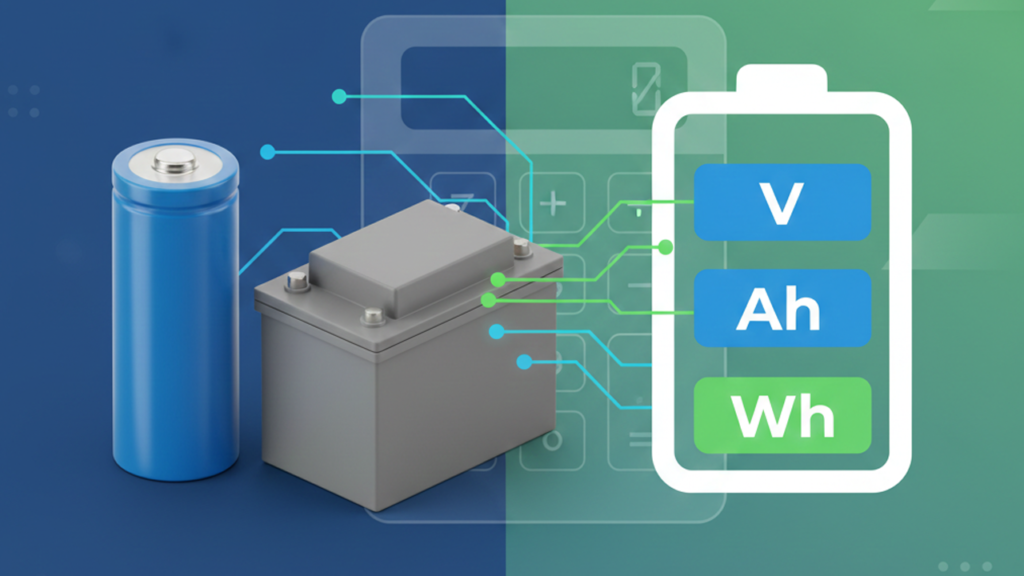
Many people confuse RC (Reserve Capacity) with Ah (Ampere-Hour).
Here’s the difference:
| Feature | RC (Reserve Capacity) | Ah (Ampere-Hour) |
|---|---|---|
| Measured In | Minutes | Amp-hours |
| Test Current | 25 Amps | Usually 20-hour rate |
| Shows | Emergency backup time | Total stored energy |
| Used For | Automotive batteries | Solar, UPS, inverter systems |
Quick Conversion Formula
You can roughly convert RC to Ah using:
Ah ≈ (RC × 25) ÷ 60
Example:
If RC = 120 minutes
Ah ≈ (120 × 25) ÷ 60
Ah ≈ 50 Ah
What Is a Good RC Rating?
The “good” RC value depends on the vehicle type.
Small Cars
- 70–100 minutes RC
Mid-Size Cars
- 100–140 minutes RC
SUVs & Diesel Vehicles
- 140–180+ minutes RC
Vehicles with heavy electronics should choose higher RC ratings.
How Reserve Capacity Is Tested
Battery manufacturers follow industry standards such as:
- Battery Council International (BCI)
- Society of Automotive Engineers (SAE)
Testing Conditions:
- Fully charged battery
- Temperature: 80°F (27°C)
- 25 amp continuous load
- Stop at 10.5 volts
The measured time in minutes becomes the RC rating.
RC vs CCA (Cold Cranking Amps)
Another common battery term is CCA (Cold Cranking Amps).
| RC | CCA |
|---|---|
| Measures backup time | Measures starting power |
| Measured in minutes | Measured in amps |
| Important for electrical load | Important for cold engine start |
Key Difference:
- CCA helps start the engine.
- RC keeps the vehicle running if the charging system fails.
Both are important, but they serve different purposes.
When Should You Choose Higher RC?
Choose a battery with higher reserve capacity if:
- You drive in hot climates.
- Your vehicle has many electronic accessories.
- You use sound systems or extra lighting.
- You often drive short distances.
- You want extra emergency backup time.
Can a Battery Have High CCA but Low RC?
Yes.
Some batteries are designed mainly for starting power. They may have:
- High CCA
- Lower RC
This means strong engine start but less backup time.
Ideally, choose a battery that balances both.
RC in Deep Cycle vs Starting Batteries
Starting Batteries
- Higher CCA
- Moderate RC
- Designed for short bursts
Deep Cycle Batteries
- Higher Ah
- Higher RC
- Designed for long steady discharge
Deep cycle batteries are used in:
- Solar systems
- RVs
- Marine applications
- UPS systems
How Long Will a Battery Last Using RC?
Example Calculation:
If your car uses 20 amps during emergency:
Battery RC = 120 minutes at 25 amps
Since load is lower (20 amps), it may last slightly longer than 120 minutes.
However, real-life conditions vary.
Signs You Need Better Reserve Capacity
- Lights dim when engine is off
- Battery drains quickly
- Frequent short trips
- Alternator issues
- Heavy electrical load
Frequently Asked Questions (FAQs)
1. What does RC mean on a battery?
RC means Reserve Capacity, which indicates backup runtime in minutes.
2. Is higher RC better?
Yes, higher RC provides longer emergency power.
3. Is RC the same as Ah?
No. RC measures time in minutes; Ah measures total energy storage.
4. What happens if RC is low?
Your vehicle may lose power quickly if the alternator fails.
Final Conclusion
RC on a battery stands for Reserve Capacity.
It tells you how long a fully charged battery can supply 25 amps before dropping to 10.5 volts.
A higher RC rating means:
- More backup time
- Better reliability
- Improved support for modern electronics
When choosing a battery, always check:
- RC (Reserve Capacity)
- CCA (Cold Cranking Amps)
- Ah rating (if available)
Understanding RC helps you select the right battery for performance, safety, and long-term reliability.