Lead Acid vs Lithium Ion Battery – Complete Comparison Guide (2026)
When choosing a battery for solar systems, inverters, UPS, electric vehicles, and backup power, the biggest question people ask is:
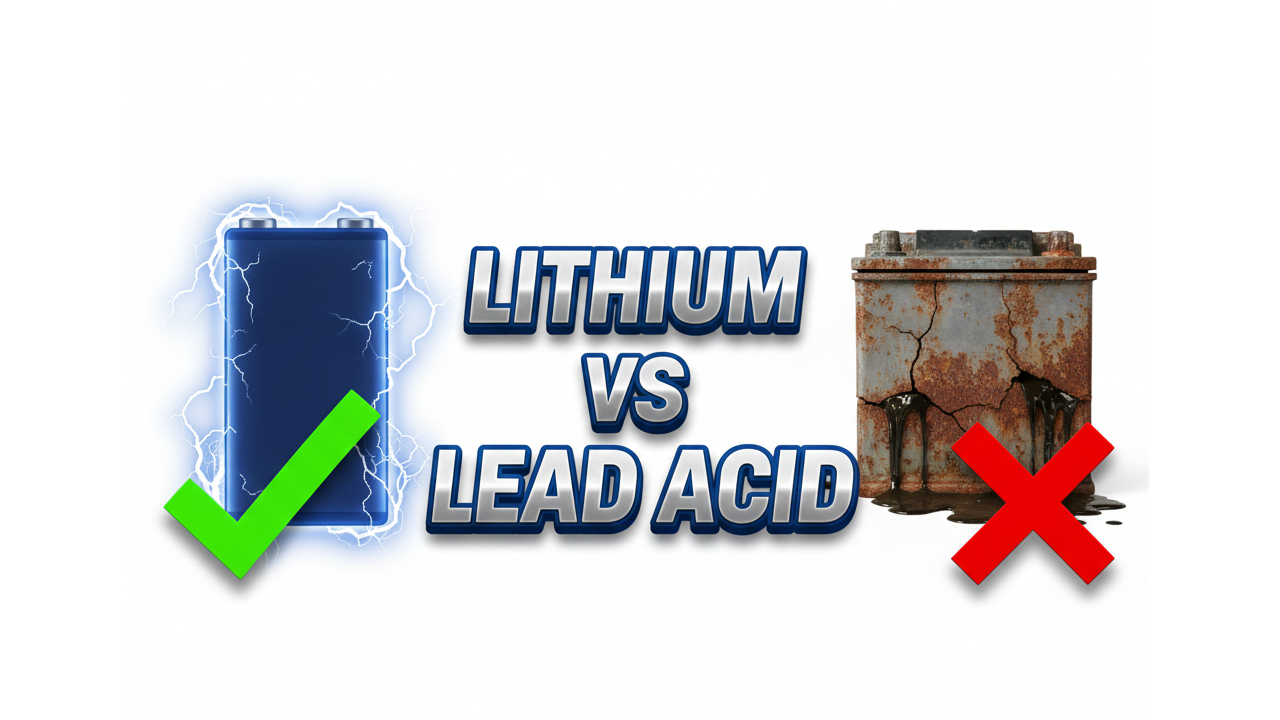
Lead Acid vs Lithium Ion – Which battery is better?
In this detailed guide, we compare lithium battery vs lead acid battery in terms of price, lifespan, charging speed, efficiency, weight, safety, and performance.
1. What is a Lead Acid Battery?
A lead acid battery is the traditional battery used in:
- Inverters
- Solar systems
- UPS
- Cars
- Home backup systems
It works using lead plates and sulfuric acid to store energy.
Types of Lead Acid Batteries
- Flooded Lead Acid
- AGM Battery
- Gel Battery
2. What is a Lithium Ion Battery?
A lithium ion battery is a modern, high-tech battery used in:
- Solar power storage
- Electric vehicles
- Power stations
- Laptops and mobiles
It uses lithium cells and BMS (Battery Management System) for smart charging and protection.
3. Lead Acid vs Lithium Ion – Main Differences
| Feature | Lead Acid Battery | Lithium Ion Battery |
|---|---|---|
| Weight | Very heavy | Very light |
| Size | Large | Compact |
| Lifespan | 2–3 years | 8–15 years |
| Charging Speed | Slow (8–10 hrs) | Fast (2–3 hrs) |
| Depth of Discharge | 50% | 90–100% |
| Efficiency | 70–80% | 95% |
| Maintenance | Needs water & care | Maintenance-free |
| Safety | Acid leakage risk | Very safe (BMS) |
4. Lithium vs Lead Acid – Power Performance
In lead acid vs lithium, lithium batteries provide:
- More usable energy
- Constant voltage
- No power drop
A 100Ah lithium battery gives almost full 100Ah,
while a 100Ah lead acid battery gives only 50–60Ah.
This means lithium battery vs lead acid gives almost double power.
5. Lead Acid Battery vs Lithium Ion – Charging & Efficiency
Lead Acid:
- Loses power while charging
- Gets hot
- Needs long charging time
Lithium Ion:
- Charges faster
- No energy loss
- Can charge from solar even in low sunlight
This makes lithium vs lead acid far better for solar systems.
6. Lithium Battery vs Lead Acid – Lifespan
| Battery | Charge Cycles |
|---|---|
| Lead Acid | 500–700 cycles |
| Lithium Ion | 4000–8000 cycles |
A lead acid battery lasts 2–3 years,
but a lithium ion battery lasts 10+ years.
So even if lithium is expensive, it is cheaper in the long run.
7. Lead Acid vs Lithium – Price Comparison
| Battery | Average Price |
|---|---|
| Lead Acid 150Ah | Low |
| Lithium 100Ah | High |
But lithium:
- Lasts 4–5 times longer
- Needs no replacement
- Saves electricity
So lithium battery vs lead acid = more savings over time.
8. Which Battery is Best for Solar?
Lithium ion battery is best because:
- Can store more solar power
- Works with MPPT inverters
- Charges faster
- Does not damage with deep discharge
Lead acid batteries die quickly in solar use.
9. Which Battery is Best for UPS & Inverter?
For short backup → Lead Acid
For long backup & daily use → Lithium Ion
10. Final Verdict – Lead Acid vs Lithium Ion
| Use | Best Battery |
|---|---|
| Solar System | Lithium Ion |
| Home Backup | Lithium Ion |
| Short UPS | Lead Acid |
| EV & Power Storage | Lithium Ion |
Winner: Lithium Ion Battery 🏆
If you want long life, fast charging, more power, and zero maintenance,
then lithium vs lead acid has only one clear winner — Lithium Ion.